
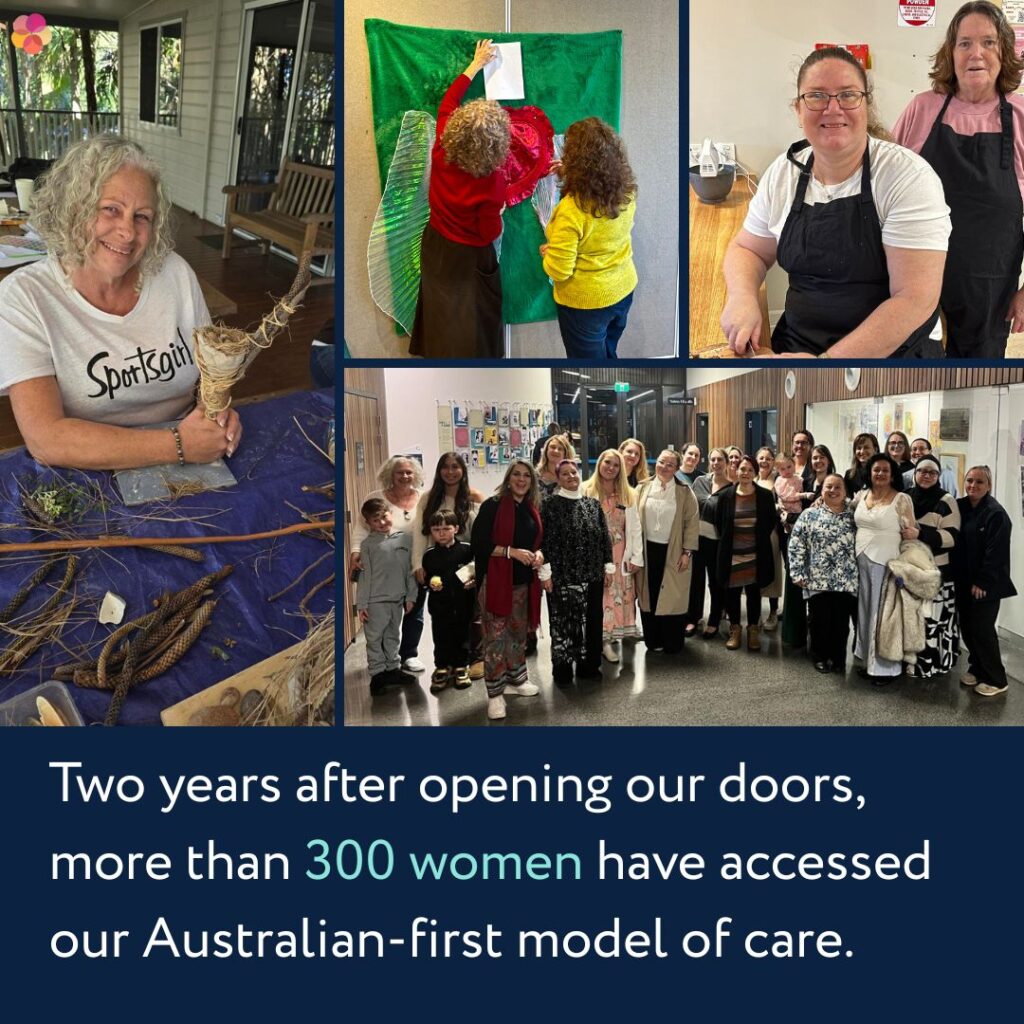


Two years after opening, growing demand for the Illawarra Women’s Trauma Recovery Centre is strengthening the case for long-term investment in specialist recovery from domestic, family and sexual violence.
More than 300 women have accessed the Australian-first service since it opened in 2024, with more than 100 women on its waiting list between January and March this year and an average wait for support of three to four months.
The Centre says the rapid increase in demand is not unique to the Illawarra, with Domestic Violence NSW reporting 94 per cent of specialist services across the state have experienced a spike in demand.
Locally, the pressure is also growing. Domestic violence-related assaults in the Illawarra increased by 16.7 per cent over the most recent two-year period, according to the NSW Bureau of Crime Statistics and Research.
The Centre says the figures reinforce the need to make healing and recovery a permanent part of Australia’s response to gender-based violence, alongside prevention, early intervention and crisis services.
In a submission to the Federal Government’s Second Action Plan, it is calling for ongoing funding for the Shellharbour service and for the Illawarra model to inform the establishment of trauma recovery centres nationally.
CEO Elise Phillips said the experience of the Centre’s first two years showed the importance of providing women with longer-term support to recover from violence.
“The demand is undeniable. Women are actively seeking long-term recovery support, and when they reach us, they tell us they feel safe, they have choice and they are finally able to access the different supports they need in one place,” Ms Phillips said.
“We cannot keep talking about ending violence against women in a generation while treating recovery as an afterthought.
“Recovery is part of how we prevent violence from happening again, how we strengthen families and how we change the future for children.
“We have the evidence. We have the demand. Now we need the long-term investment to match it.”
“Women tell us they feel safe at our Centre. They have choice and can access different types of support without having to continually retell their story.
“What we have learned in the Illawarra shows recovery must be a fundamental part of Australia’s response to domestic, family and sexual violence.”
The Centre brings counselling, casework, legal and financial counselling and a range of therapeutic programs together in one location. A single holistic assessment can be used across services, reducing the need for women to repeatedly recount their experiences.
An interim evaluation found women reported an increased sense of safety and choice through the Centre’s wrap-around approach, while clients accessed an average of three therapeutic supports.
Early client survey results also show 74 per cent of counselling respondents reported decreased trauma symptoms and 84 per cent of group participants reported improved wellbeing.
All respondents who accessed financial counselling reported greater confidence and capacity to manage their finances.
The Centre argues recovery is also part of preventing future violence.
Its submission says recovery support can reduce isolation and vulnerability to further violence by strengthening financial independence, social connection and emotional and physical wellbeing.
It also points to the impact recovery can have on the next generation, with support for victim-survivor parents helping restore relationships with children, reduce their exposure to further violence and disrupt intergenerational cycles of violence.
The Centre wants that support extended further, calling for funding to provide specialist recovery services directly to children and young people.
The submission says there is a critical shortage of specialist support for young victim-survivors, with existing programs often limited by age, capped sessions, cost, eligibility requirements or long waiting lists. It argues children should be recognised and supported as victim-survivors in their own right.
“Recovery is not only about helping a woman deal with what has happened to her,” Ms Phillips said.
“It can reduce the risk of further violence, strengthen families and change the trajectory for children.
“If we invest in recovery, we are also investing in prevention and in a safer future for the next generation.”
You can read the submission here.