
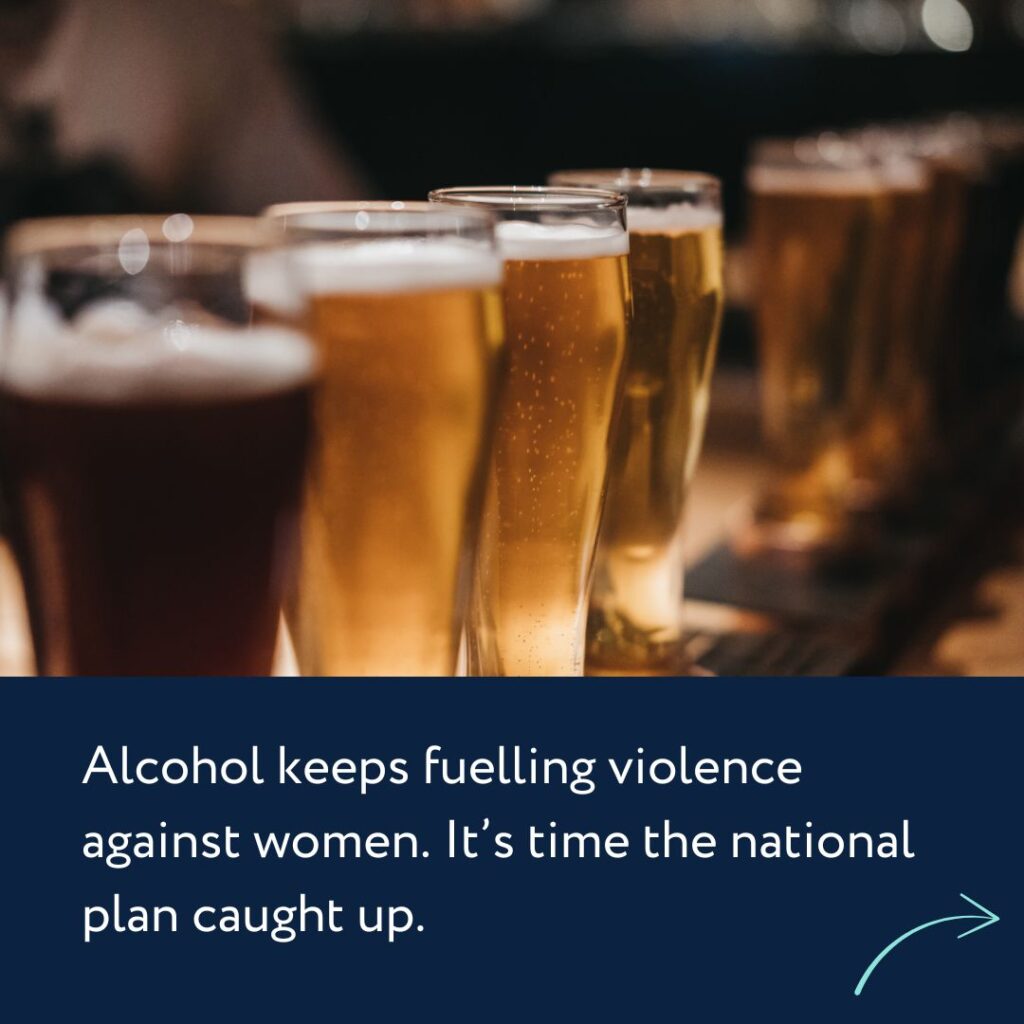


The Illawarra Women’s Trauma Recovery Centre is urging the Federal Government to back up its recognition of alcohol’s role in gender-based violence with targeted national strategies to prevent and respond to alcohol-fuelled harm.
While the National Plan to End Violence against Women and Children 2022–2032 acknowledges that alcohol and substance use can increase the frequency and severity of abuse, frontline services say policy attention has not yet translated into action.
Executive Director of the Centre, Sally Stevenson, said alcohol is one of the most consistent and preventable risk factors seen in women’s trauma and recovery journeys.
“Alcohol often tips families from stress into crisis,” Ms Stevenson said. “The national plan recognises that risk, but now we need policies and programs that actually prevent it.
Her call comes as a new study by RTI International found that men’s drinking is a major contributor to intimate partner violence and child maltreatment worldwide, causing physical, emotional, and financial harm even at non-dependent levels of alcohol use.
Similarly, a The Conversation article co-authored by Australian public health experts warns that “women and kids often pay a heavy price when men drink” and argues that the national gender-violence plan must directly address alcohol-related harm.
In 2018, a La Trobe University study found that domestic assaults increased by more than 40 per cent in NSW on the nights of State of Origin.
At the time, Foundation for Alcohol Research and Education (FARE) Chief Executive, Michael Thorn, said it was apparent that the State of Origin games were driving an increase in domestic violence (including alcohol-related domestic violence) in NSW.
Ms Stevenson said local services are witnessing the impact firsthand.
“The evidence is right in front of us. Every State of Origin, every long weekend, services brace for a spike in calls.
“The national plan must do more than name the problem. It has to fund and enforce solutions that tackle alcohol’s role head-on.”
An Australian Government rapid review of evidence-based approaches to prevent gender-based violence in 2024 recommended restrictions on alcohol sale, advertising and delivery and identified the potential for cross-sector collaboration between alcohol and the domestic, family and sexual violence sector.
The ACT and South Australia have both taken steps to address these issues, with bills to establish a 2-hour safety pause between the sale and delivery of alcohol.
The Centre is calling for alcohol-specific prevention measures to be embedded in the National Plan’s implementation phase, including stronger regulation of availability and promotion, cross-sector early-intervention programs, and investment in trauma recovery services.
“If we’re serious about ending violence against women and children, we must name alcohol’s role and fund the responses that stop harm before it starts, and support families to rebuild when it doesn’t,” Ms Stevenson said.
The Illawarra Women’s Trauma Recovery Centre is a place for women to heal and rebuild their lives if they have or are experiencing domestic, family and sexual violence.
Our range of services supports women in living secure and independent lives.