


Australia’s national effort to end domestic, family and sexual violence is entering a critical new phase, according to the Domestic, Family and Sexual Violence Commission’s 2025 Yearly Report.
The report outlines both what has been achieved through the First Action Plan 2023-2027, which set the foundation for the National Plan to End Violence Against Women and Children (2022-2032), and what must change to ensure every person in Australia can live free from violence.
It maps out 30 recommendations covering everything from an audit of the family law system to investment in addressing online misogyny and radicalisation, to funding programs for children and young people, and to stronger coordination across governments.
Micaela Cronin, Australia’s Domestic, Family and Sexual Violence Commissioner, who will visit the Illawarra Women’s Trauma Recovery Centre on Wednesday, November 5, said the heart of the Commission’s findings lies in the gap between evidence and action.
“Yet as I reflect on this second year of reporting to Parliament, I am struck not by despair but by a profound sense of possibility – and urgency. The gap between what we know needs to be done and what – and most critically how – we are implementing at scale has never been more apparent,” she writes.
The report continues: “Despite decades of inquiries, substantial government investment and remarkably consistent recommendations, Australia is not seeing commensurate progress towards ending violence against women and children.
“The focus must turn to closing the gap between evidence and implementation. There are pockets of excellence across the country, but we must work together to share, learn, coordinate and scale effective interventions and supports to end gendered violence within a generation.”
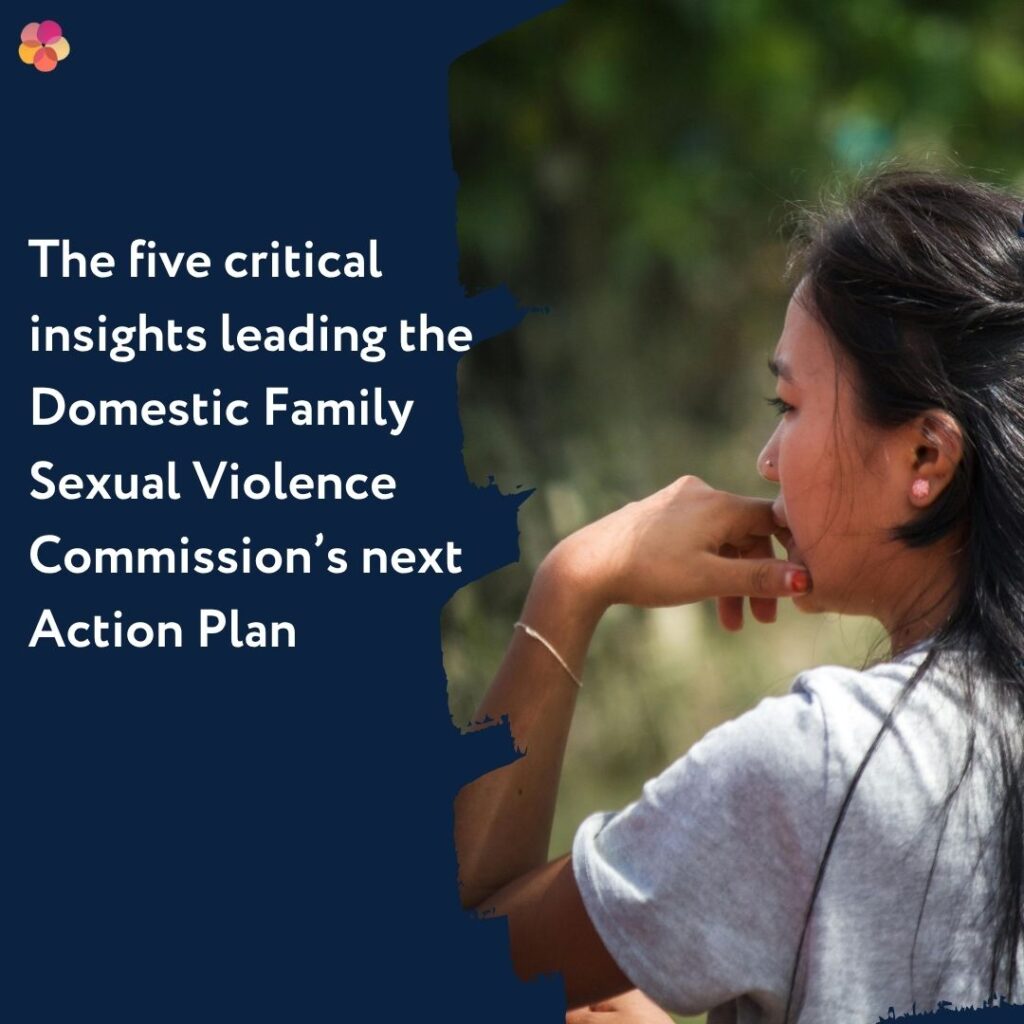
The report identifies five critical insights that must shape Australia’s next Action Plan, which it says must begin immediately and prioritise collaboration, information sharing between organisations and departments, and guidance from lived experience.
Sally Stevenson, Executive Director at the Illawarra Women’s Health Centre, said the Commission’s message highlights the importance of integrated and evidence-based systems.
“The Commission’s report highlights the importance of integrated, evidence-based, properly resourced responses that bring systems together rather than working in isolation,” Ms Stevenson said.
“When services share information and align around common goals, we see more consistent outcomes for women and families, and a clearer picture of what actually drives long-term safety.”
The report also finds that the most effective solutions continue to come from people with lived experience of violence. Aboriginal and Torres Strait Islander women, people with disability, LGBTIQA+SB communities and multicultural groups have developed community-led approaches that work, yet they remain under-represented in national decision-making.
The Commission calls for governments to create structures that listen systematically, including a Domestic, Family and Sexual Violence Youth Advisory Council to ensure young people have a formal role in shaping and monitoring the next plan.
Another finding focuses on the way services and institutions operate. The report warns that siloed systems, where child protection, family law, health and justice services act independently, create gaps that can place people at risk.
To address this, the Commission recommends a Commonwealth oversight mechanism to track progress across government, provide regular reporting to Cabinet, and maintain domestic, family and sexual violence prevention as a standing national priority.
The Commission also notes that many frontline systems, including police and hospitals, still operate from a mindset of control rather than care.
It says this dynamic can unintentionally replicate the power imbalances that enable abuse. It urges governments and service leaders to invest in trauma-informed, compassionate responses.
The report makes clear that safety must become a right rather than a privilege.
Ms Stevenson said an individual’s safety can often depend on where they live, their financial situation or their ability to navigate complex systems.
“Everyone deserves to feel safe, no matter who they are or where they live,” she said. “When systems are hard to access or don’t work together, people can end up feeling lost instead of supported.”
The Commission suggests that instead of viewing people as vulnerable, governments should recognise how systems themselves can create vulnerability.
It recommends strengthening the Commission’s powers as a statutory authority to collect data and monitor outcomes, while consolidating the role of Australia’s National Research Organisation for Women’s Safety (ANROWS) as the national evidence convenor.
Commissioner Micaela Cronin will visit the Illawarra Women’s Trauma Recovery Centre on Wednesday, November 5, to take part in a Women’s Domestic Family and Sexual Violence Regional Roundtable hosted by the Illawarra Women’s Health Centre and the Illawarra Women’s Trauma Recovery Centre.