
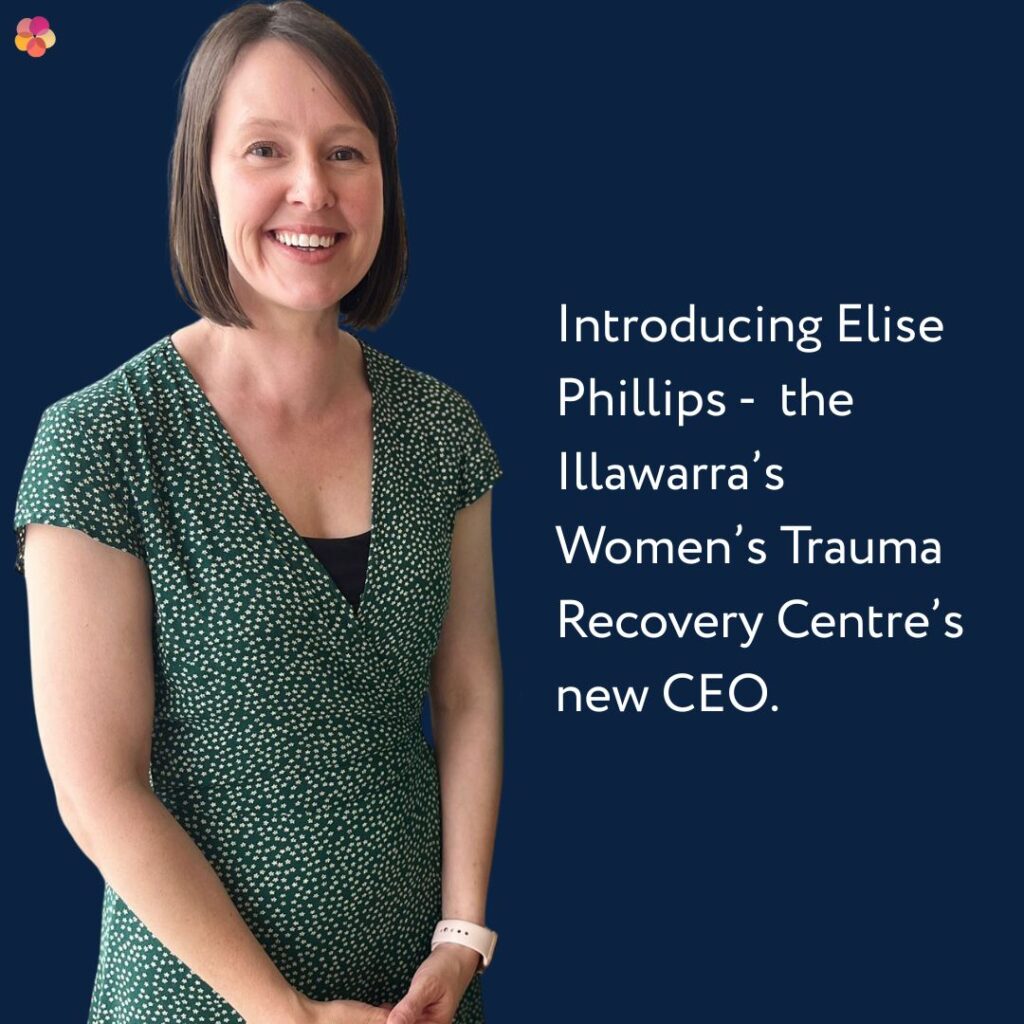


Illawarra Women’s Trauma Recovery Centre has appointed Elise Phillips as its new CEO, bringing more than 15 years’ experience across counselling, leadership and systems advocacy in the domestic, family and sexual violence sector.
Growing up in Towradgi and studying at the University of Wollongong, Ms Phillips has built a career grounded in community and relationships, with a deep commitment to improving safety and recovery for women.
Ms Phillips’ career began at CatholicCare Wollongong, where she worked as a counsellor and later in leadership roles.
Her transition into the domestic and family violence sector came during the COVID-19 pandemic, when she joined No to Violence as Sector Development Manager.
There, she worked with practitioners delivering men’s behaviour change programs, focusing on consistency, risk management and information sharing across New South Wales.
“That role really cemented my interest in system-wide change,” she said.
“If we get the systems right, the impact for women and children can be profound.”
She later joined Domestic Violence NSW (DVNSW), where Ms Phillips first served as Interim CEO before returning as Policy and Advocacy Manager and Deputy CEO.
During her time at the peak body, she became known for a relational but resolute approach to advocacy – one that balanced holding governments to account with building long-term partnerships.
Ms Phillips describes the opportunity to lead the Illawarra Women’s Trauma Recovery Centre as “incredibly exciting.”
“I’m excited about the opportunity to be part of a service that’s doing something that’s never been done before,” she said.
“An Australian first that’s co-designed with lived experts.”
She said the centre’s wraparound model responds directly to the challenges victim-survivors face when navigating complex systems.
“I know how hard it is to engage with multiple service providers when your capacity is diminished,” she said. “You’re exhausted, you’re traumatised, and the system is complicated and hard to access.”
“So instead of going to five different services to get your needs met, come to one place for holistic recovery-oriented support.”
The Centre’s Executive Director, Sally Stevenson, said Ms Phillips will lead the organisation into its next phase.
“Elise’s commitment to collaboration, co-design and community is a natural fit for this service,” Ms Stevenson said.
“She brings both strategic insight and a deep respect for lived experience, which are central to how the centre works.”
Looking ahead, Ms Phillips said success will be measured over the long term.
“I think success is that in five or six years the centre has grown into a vital part of the service system and has recurrent funding,” she said.
She also hopes the Centre will help build a recovery-focused workforce.
“There is a limited pool of people with experience in recovery-oriented work,” she said. “We’ll be successful if we’re contributing to the growth of that workforce.”
Ultimately, Ms Phillips said success comes down to outcomes for women.
“If the women who access our service are living safer and better lives, then we’re successful.”
She said one of the most distinctive aspects of the centre so far is the sense of community that has emerged.
“I’ve never worked in a service before that had a strong sense of community and connection with people receiving support,” she said.
She pointed to shared spaces and events as key to that environment.
“Hopefully, when people walk into this place for the first time, it’s less confronting and less scary,” she said. “It’s a place where we can be vulnerable, we can be honest, and we’ll be supported.”