
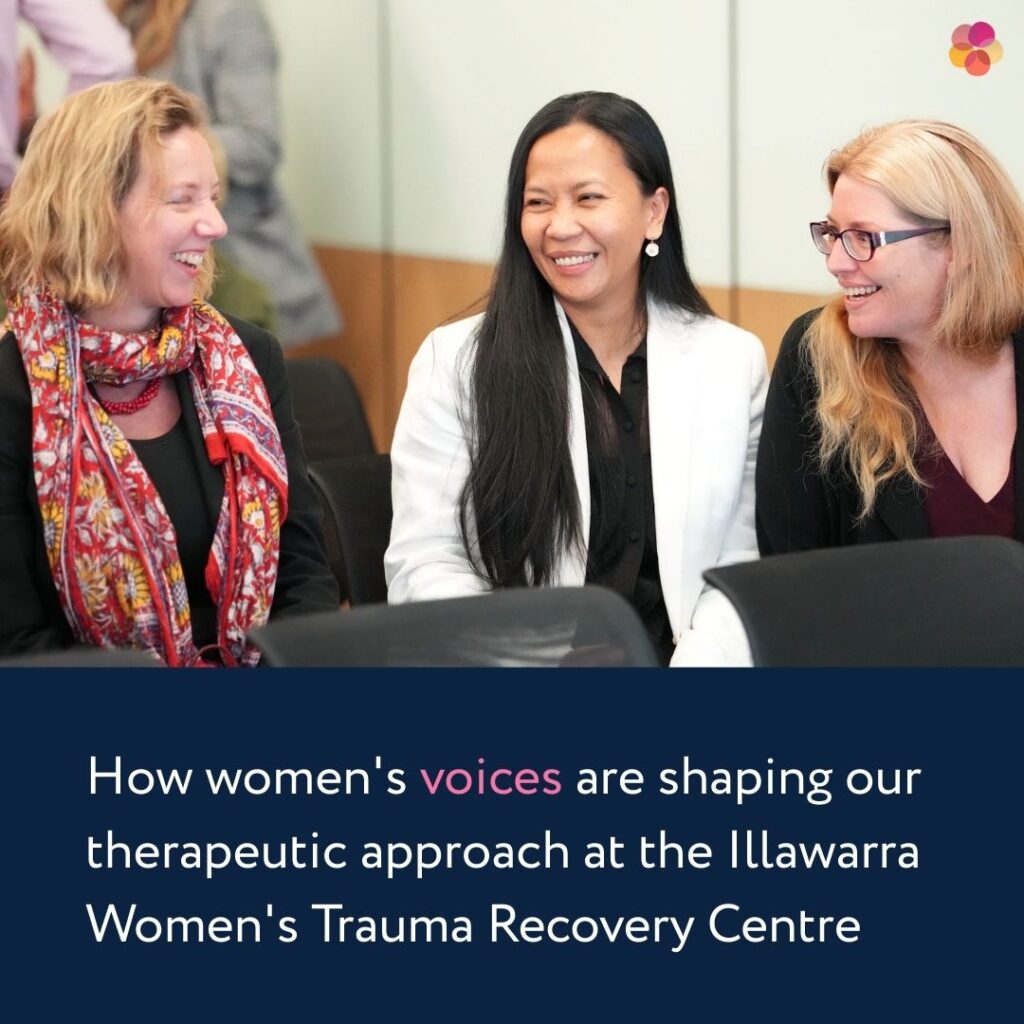


A therapeutic model shaped by women who use it has been released by the Illawarra Women’s Trauma Recovery Centre, marking a new phase for the Australia-first service.
The updated therapeutic framework supports the Centre to implement its model of care and captures what the Centre has learned since opening in September 2024, drawing directly on the experiences of women accessing support after domestic, family and sexual violence.
Over that time, victim-survivors have worked alongside staff through the Lived Experience Advisory Network to review programs, spaces and approaches to care.
CEO Elise Phillips said the revision reflects a deliberate commitment to adapt the service based on evidence from practice and lived experience.
“This Centre was designed to evolve,” she said. “Women have shown us what recovery looks like day to day and what services help. The updated model reflects everything we have learnt in the past 18 months.”
Learning from real-world recovery
The framework recognises that recovery is not linear and healing from complex trauma is “cyclical, layered and personal,” requiring long-term and flexible support.
The model emphasises stabilisation and safety before trauma processing, ensuring practical foundations such as housing, relationships, and emotional regulation are in place to allow the brain to focus on healing rather than survival.
The updated approach also reinforces holistic supports, including counselling, somatic therapies, social connection, and cultural healing, acknowledging that recovery spans emotional, physical, and social wellbeing.
“We’ve learned that healing happens in many places,” Ms Phillips said. “Connection, culture, choice and dignity are all part of recovery, and women told us clearly they need the whole picture.”
Built to keep changing
The Centre says the framework will continue to evolve, with evaluation processes co-designed with survivors and ongoing feedback shaping service delivery.
Long-term, the aim is broader sector reform. If outcomes demonstrate sustained recovery, the model could be replicated nationally.
“This is bigger than our region,” Ms Phillips said. “We’re building an approach Australia has not had before, and we want what we learn here to improve recovery services everywhere.”
Five things you need to know about the Women’s Trauma Recovery Centre’s approach to healing
1. Women shaped our therapeutic model
Women with lived experience have shaped how our programs and spaces work. Their insight helps guide decisions about what recovery support should look like.
2. Recovery takes time
We support long-term healing from complex trauma. Every recovery journey is different and unfolds at its own pace.
3. Healing is holistic
Support can include counselling, body-based therapies, connection, culture and well-being. Healing happens in many different ways and places.
4. Safety comes first
Choice and control sit at the centre of care. Stabilisation and trust are prioritised before any trauma processing.
5. Designed to change the system
The model is being evaluated so it can inform services across Australia, improving recovery care for more women who have experienced domestic, family and sexual violence.