


Four in five people killed by a current or former intimate partner in NSW are women, according to a new public dashboard that sheds fresh light on the gendered nature of domestic violence.
The Illawarra Women’s Trauma Recovery Centre has welcomed the launch of the first-of-its-kind resource, saying timely, publicly available data will strengthen understanding, improve accountability and help inform efforts to prevent domestic violence.
Developed by the NSW Domestic Violence Death Review Team (DVDRT), the online dashboard is the first of its kind in Australia. Updated every quarter, it provides detailed information on domestic violence homicides, including where they occur, the relationships between victims and offenders, and causes of death.
Unlike traditional crime statistics, the dashboard draws on specialist domestic violence death reviews that examine the broader context of abuse leading up to a death.
It includes intimate partner homicides as well as deaths involving children, parents, extended family members and others where domestic violence was a contributing factor.
The data reinforces that domestic violence disproportionately affects women. It shows 99 per cent of the 293 women killed by a current or former intimate partner since 2000 were the victim of domestic violence in that relationship.
The dashboard also shows that while men can be victims of intimate partner homicide, almost three-quarters of the men killed by a current or former partner had been the person using violence in the relationship.
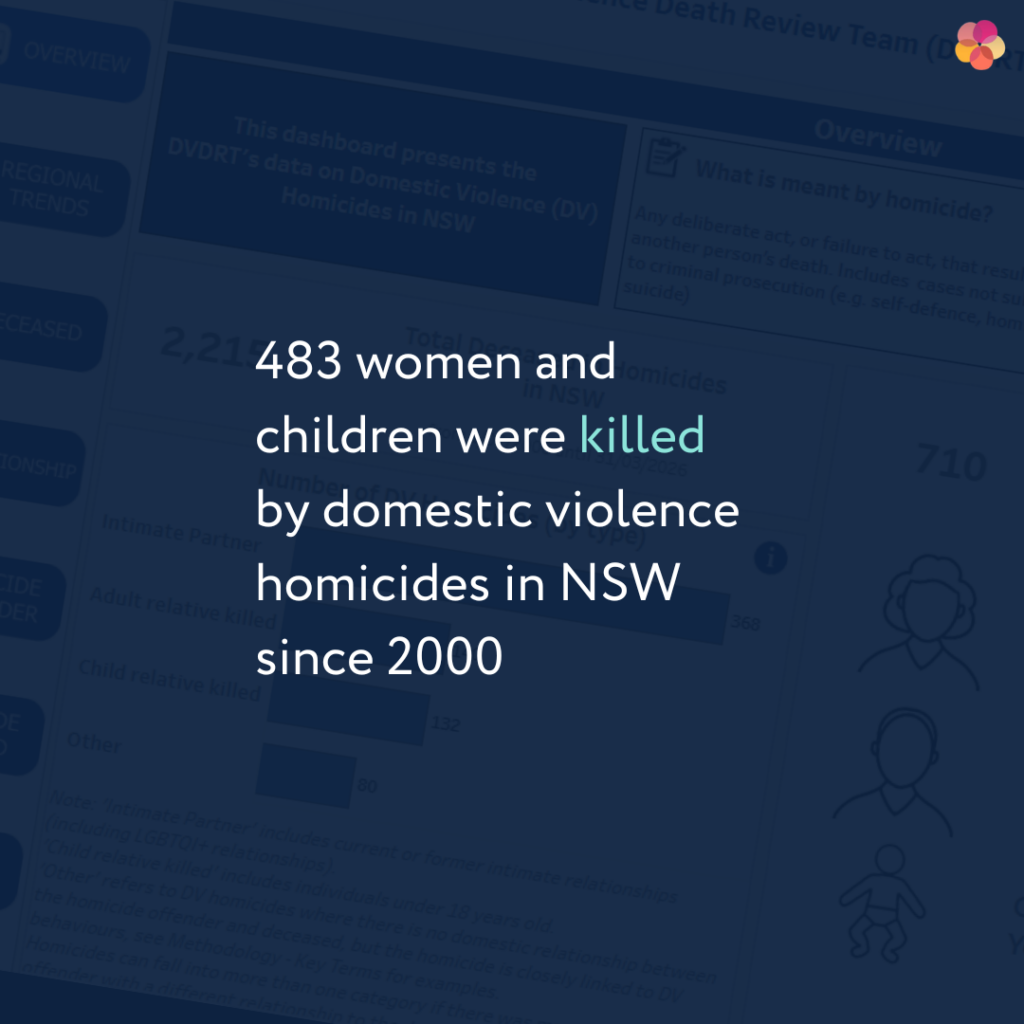
Overall, the dashboard records 349 women and 134 children and young people killed in domestic violence homicides across NSW since 2000. It also shows almost one in three homicides in NSW occurred following an identifiable history of domestic violence.
Illawarra Women’s Trauma Recovery Centre Chief Executive Officer Elise Phillips said the dashboard reinforces the need to recognise domestic and family violence as a gendered issue while continuing to improve responses for all victim-survivors.
“The data makes clear that domestic and family violence disproportionately affects women, and that violence often escalates over time,” Ms Phillips said.
“Making this information available in a more timely way helps ensure these lives are not forgotten. It also strengthens the evidence needed to improve prevention, policy and responses for victim-survivors.”
NSW Women’s Safety Commissioner Dr Hannah Tonkin said every domestic violence-related death was a tragedy.
“The Dashboard will help identify the patterns of behaviour and warning signs that preceded these senseless deaths. It will also contribute to our understanding of systemic issues and trends, which can help improve responses to domestic violence and ultimately prevent further deaths from happening.”
The dashboard will continue to expand as further findings from the Domestic Violence Death Review Team’s detailed case reviews are added, providing an ongoing picture of domestic violence homicides across New South Wales and helping inform prevention efforts.