
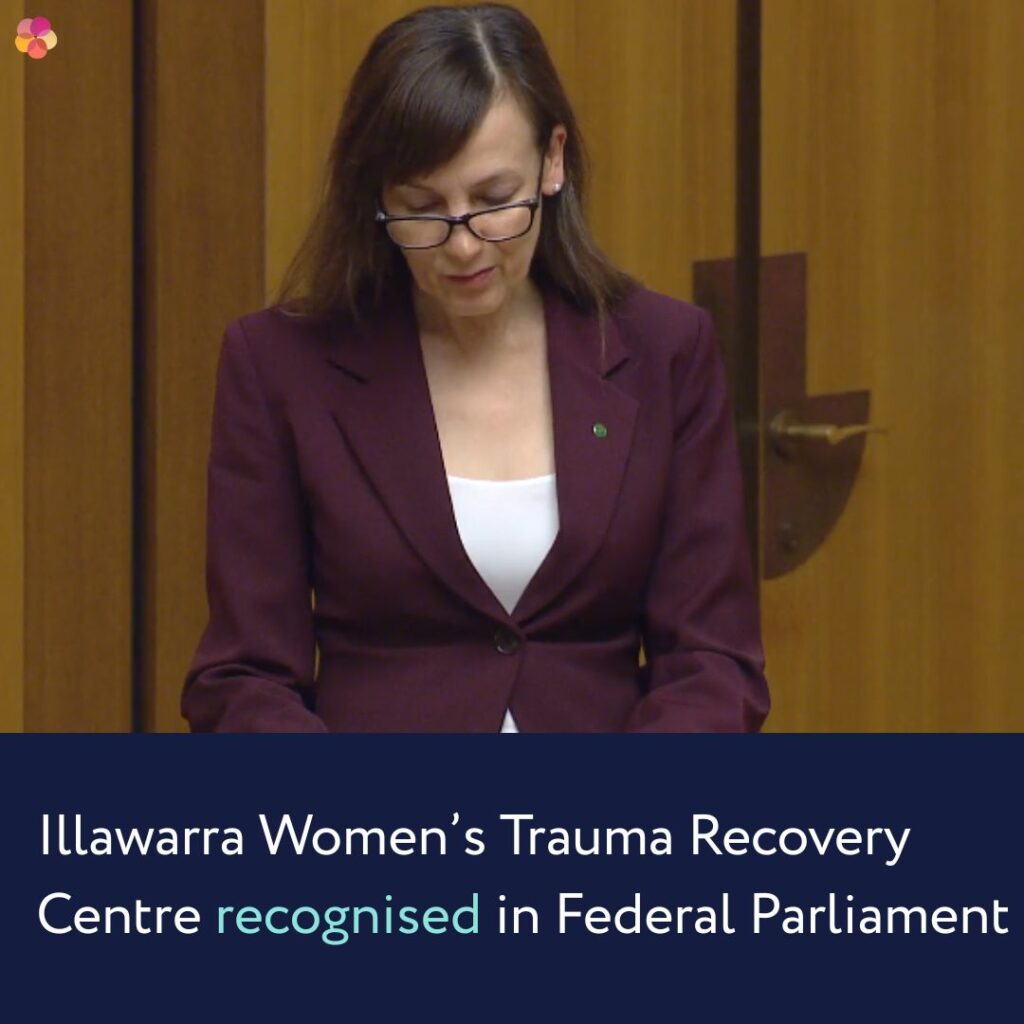


Federal Member for Whitlam Carol Berry has recognised the work of the Illawarra Women’s Trauma Recovery Centre in Federal Parliament, as she called for communities to take collective responsibility for ending violence against women and children.
Speaking in Parliament, Ms Berry described domestic and family violence as “one of the most serious challenges facing our community” and highlighted local organisations working to prevent violence and support women and children, including the Centre.
“I commend the efforts of everyone in my community working hard to end violence against women and children,” Ms Berry told Parliament.
“In my electorate of Whitlam, I want to be part of the solution, as do so many people in my community.”
Ms Berry also acknowledged the work of Pop In in the Southern Highlands, Healthier Illawarra Men, the Illawarra Women’s Health Centre, the Illawarra Committee Against Domestic Violence and local Rotary organisations.
Her comments came just days after she joined more than 100 supporters, community leaders and NSW Minister for Health, Ryan Park, at the Illawarra Women’s Trauma Recovery Centre in Shellharbour for the launch of its first Strategic Plan.
The 2026–2029 Strategic Plan sets the Centre’s direction for the next three years, with a focus on strengthening its recovery model, listening to and learning from women with lived experience, and building a sustainable future for specialist long-term trauma recovery.
More than 300 women have accessed support through the Centre since it opened in 2024, with demand continuing to grow.
Illawarra Women’s Trauma Recovery Centre CEO Elise Phillips said it was encouraging to see the work happening locally to support women’s recovery recognised in Federal Parliament.
“Ending violence against women and children requires all of us to play a part, but it also requires us to make sure women who have experienced violence can access the specialist support they need to recover and rebuild their lives,” Ms Phillips said.
“We welcome Carol’s recognition of the Centre and the many organisations across our region working every day towards a future where women and children are safe from violence.”
In Parliament, Ms Berry said preventing violence required action across the community, including challenging harmful attitudes towards women when they emerged.
“Whenever poor or violent attitudes towards women manifest, they must be immediately challenged,” she said.
“We cannot lose another woman or child to domestic or sexual violence.
“We must see the warning signs, and act sooner.
“And this responsibility sits with all of us.”
The Australian Government’s National Plan to End Violence against Women and Children 2022–2032 sets a national goal of ending gender-based violence in one generation.
The Illawarra Women’s Trauma Recovery Centre has also contributed to the Federal Government’s consultation on the Second Action Plan under the National Plan, calling for recovery and healing to be given a stronger place in Australia’s response to domestic, family and sexual violence.
In its submission, the Centre made 16 recommendations, including calls for long-term funding for its Australian-first trauma recovery model in Shellharbour, greater investment in specialist long-term recovery services nationally, and dedicated recovery support for children and young people who experience domestic, family and sexual violence.
The Centre has argued that Australia cannot achieve its goal of ending violence in a generation by focusing only on prevention and crisis response, with long-term recovery also playing an important role in reducing further violence, strengthening families and disrupting intergenerational cycles of trauma.
Ms Phillips said the next Action Plan was an opportunity to make recovery a more fundamental part of the national response.
“The Second Action Plan must recognise that investing in healing and recovery is one of the most effective ways we can prevent future violence and create lasting change,” she said.