


Women giving evidence in adult sexual assault trials in Wollongong could face clearer limits on questioning and fewer demands to repeat their accounts under reforms proposed by the NSW Government.
Women who report sexual assault can wait months or years to give evidence in court, knowing they will have to describe what happened and face questions about deeply traumatic experiences.
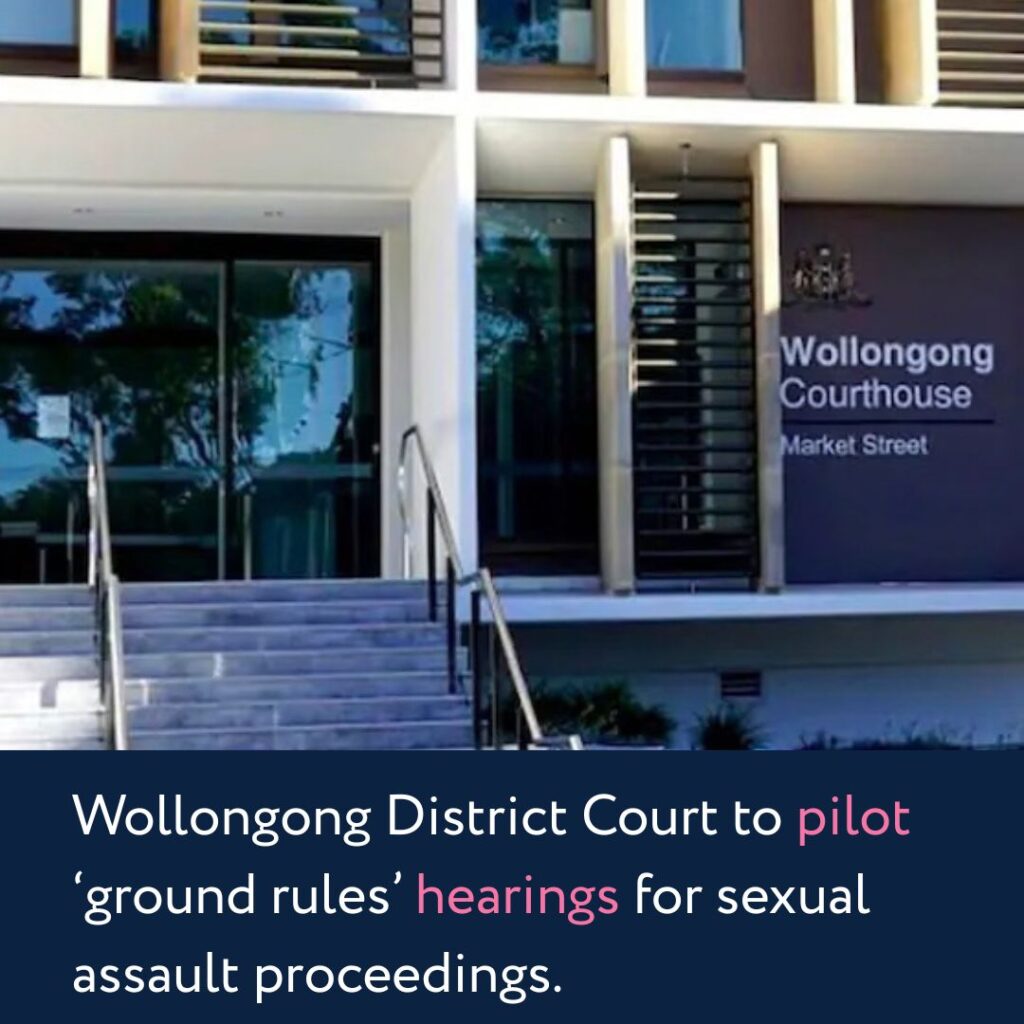
The proposed NSW reforms aim to make that process less distressing, with Wollongong District Court among three courts selected to trial new rules governing how adult sexual assault victims are questioned.
The changes respond to concerns raised by survivor advocates, including the Illawarra Women’s Trauma Recovery Centre, that seeking justice can add to the harm women have already experienced.
If the reforms pass, from 2027 to 2030, Wollongong, Parramatta and Dubbo District Courts will pilot “ground rules hearings”, backed by $4.8 million in government funding.
These hearings will take place before a victim gives evidence, allowing the court to establish ground rules on how long questioning lasts, how questions are asked and what topics can be covered. For women giving evidence, this could mean clearer expectations and better protection from inappropriate or irrelevant questions.
Elise Phillips, CEO of the Illawarra Women’s Trauma Recovery Centre, said that giving evidence in court can be one of the hardest parts of a survivor’s journey.
“This is a step in the right direction towards a more trauma-informed legal process for women who report sexual assault. We welcome the selection of Wollongong District Court as a pilot location for these reforms.”
The proposed legislation would also allow a woman’s recorded police interview to be played in court as her initial account, known as “evidence in chief”.
The evidence-in-chief provisions will be extended to sexual assault proceedings as well as in standalone Apprehended Domestic Violence Order Proceedings, even if there are no criminal charges.
A separate statutory review of the Child Sexual Offence Evidence Program will begin early next year. It will consider the feasibility of allowing adult sexual assault complainants to pre-record the entirety of their evidence, including cross-examination and re-examination, a process Fair Agenda has been campaigning for.
“We look forward to seeing the results of this pilot. Combined with the review of the Child Sexual Offence Evidence Program, we expect there to be strong evidence that pre-recorded evidence, including cross-examination and re-examination, is the best practice to minimise trauma for victim-survivors,” Ms Phillips said.
“We know that victim-survivors often find reporting sexual assaults incredibly hard and the justice process can sometimes be distressing,” Minister for Women and Minister for the Prevention of Domestic Violence and Sexual Assault Jodie Harrison said.
“These reforms are an important part of the wider work we are doing to support victim-survivors, through justice system navigators and in healing and recovery.”
Attorney General Michael Daley welcomed the reforms.
“These commonsense reforms will go a long way towards making it less traumatising for sexual assault complainants to seek justice,” he said.
“Sexual assault complainants and witnesses are especially vulnerable in our justice system. We want to help them give their best evidence by ensuring they do not need to tell their story multiple times and deterring inappropriate and irrelevant questioning in court.”