
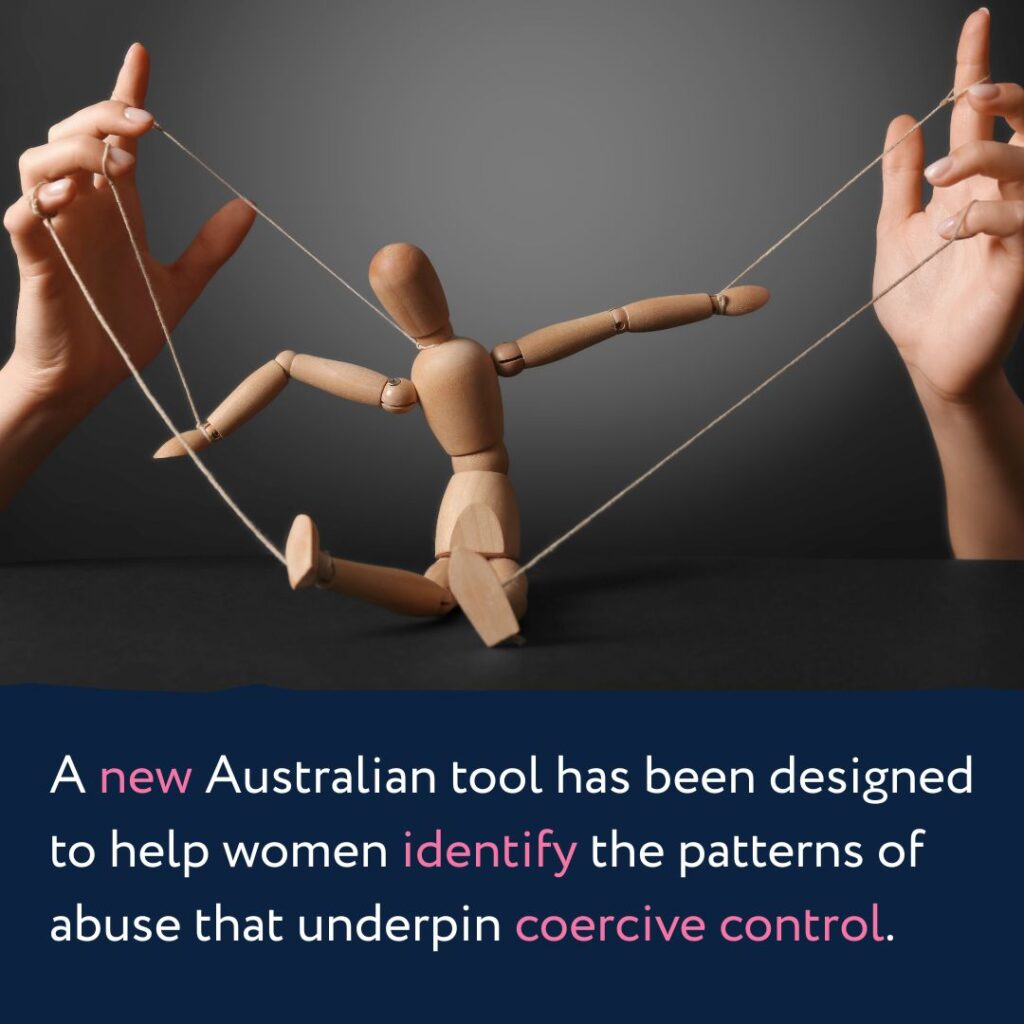


A new Australian tool has been designed to help women identify the patterns of abuse that underpin coercive control.
Researchers from the University of Melbourne have developed the Coercive-Composite Abuse Scale (C-CAS), a new 30-item questionnaire that takes about five minutes to complete and is designed to capture the different and often overlapping ways coercive control is experienced.
Coercive control can be difficult to measure because it can encompass physical and sexual violence alongside psychological abuse, isolation, intimidation, financial abuse, reproductive coercion, monitoring and technology-facilitated abuse.
The new scale brings these behaviours together, recognising that coercive control is often not one act of abuse, but a pattern of behaviours used to dominate, control and restrict a woman’s autonomy.
The study, led by Professor Kelsey Hegarty, a leading Australian researcher in intimate partner violence and family violence prevention, involved 854 Australian women and found patterns involving multiple forms of abuse were strongly associated with fear.
The behaviours captured by the tool range from jealousy, isolation, financial control and monitoring a woman’s movements through to sexual coercion, threats against women and their children, restricting access to essentials, interfering with healthcare and threatening to distribute intimate images.
Almost 78 per cent of women experiencing a combined pattern of Severe Coercive Control reported being afraid of their partner or former partner in the previous 12 months.
Illawarra Women’s Trauma Recovery Centre CEO Elise Phillips said recognising the pattern was important because individual behaviours could sometimes be difficult for women to identify as abuse.
“Coercive control is rarely about one incident or one form of abuse. It is the accumulation of behaviours that can gradually take away a woman’s independence, choices and sense of safety,” Ms Phillips said.
“A threat, financial control, monitoring a phone or isolating someone from family and friends can look very different when viewed separately. When we understand them as part of a pattern, we get a much clearer picture of what a woman is experiencing and the impact it can have on her life.
“Understanding coercive control is important for our whole community. We must continue to build a shared understanding of how to engage in respectful relationships and what behaviours are controlling and abusive.”
“We must teach respectful relationships to our children and young people. We must also call out disrespect when we see it”.
The researchers said the C-CAS had demonstrated initial reliability and validity, but further testing with more diverse groups, including different genders and languages, was needed.